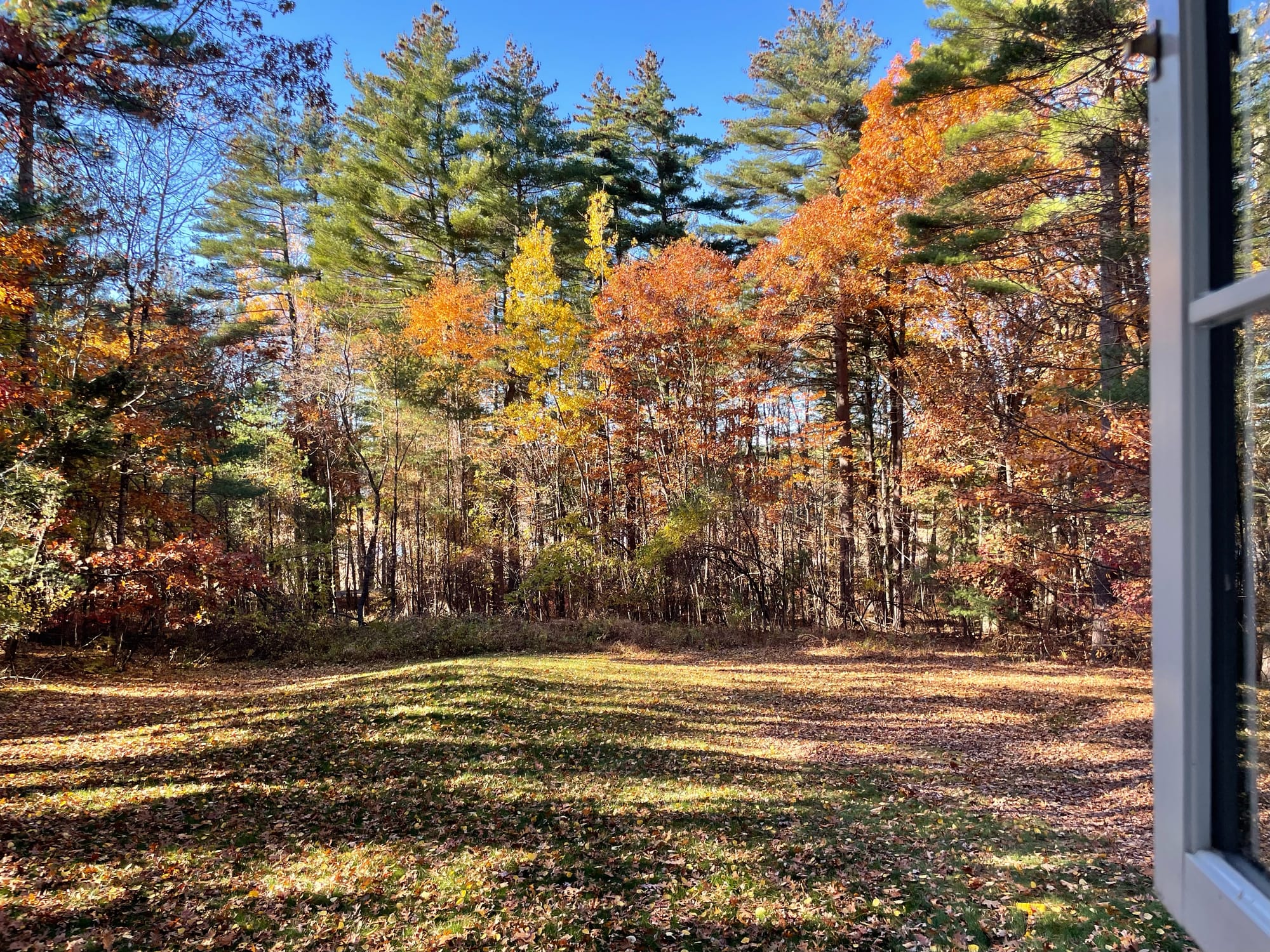
Behind our property, some 100 yards out, is a small pond that's part of a larger conservation area. Hiking trails lead from our little triangle-shaped stretch of land to the pond, where a network of trails fans out across a beautiful area of marsh, ponds, and dense forest.
In the summer, when the plants and trees around our home are in full bloom, we can't see the pond, or much of anything beyond the trees near our home. We can barely make out the outlines of a few neighbors' houses in the distance, and occasionally see headlights passing by at night.
In late autumn, after the leaves turn and fall, we start to see more of the pond. By November, the trees have cleared enough that we get a good look at it–our first open view since the previous winter.
"The woods are now much more open than when I last observed them," wrote Henry David Thoreau in a November 1851 journal entry, "the leaves have fallen, and they let in light, and I see the sky through them as through a crow's wing in every direction."
Fall in New England is my favorite season—my idea of the most calming setting of any time and place I've experienced personally—and I make an effort to slow down each autumn to enjoy the short window when the leaves are at their colorful peak.
When the leaves start to really fall, there's a definite feeling of loss. The season is ending, the year itself is almost over, and everything's moving toward the cold of winter and the darkness of shorter days.
"They teach us how to die," Thoreau wrote of fall leaves in "Autumnal Tints."
"They that soared so loftily, how contentedly they return to dust again, and are laid low, resigned to lie and decay at the foot of the tree, and afford nourishment to new generations of their kind, as well as to flutter on high!"
But washing the dishes, looking out across the yard from the kitchen window as more leaves pile across the lawn than adorn the trees, I catch a small, shimmering glimpse of the pond in the distance. I see more sky peek through, more light.
It reminds me of a poem by 17th-century Japanese poet Mizuta Masahide:
Barn's burnt down
now
I can see the moon.
The brilliant colors of the last month are almost gone. But something else always takes its place.