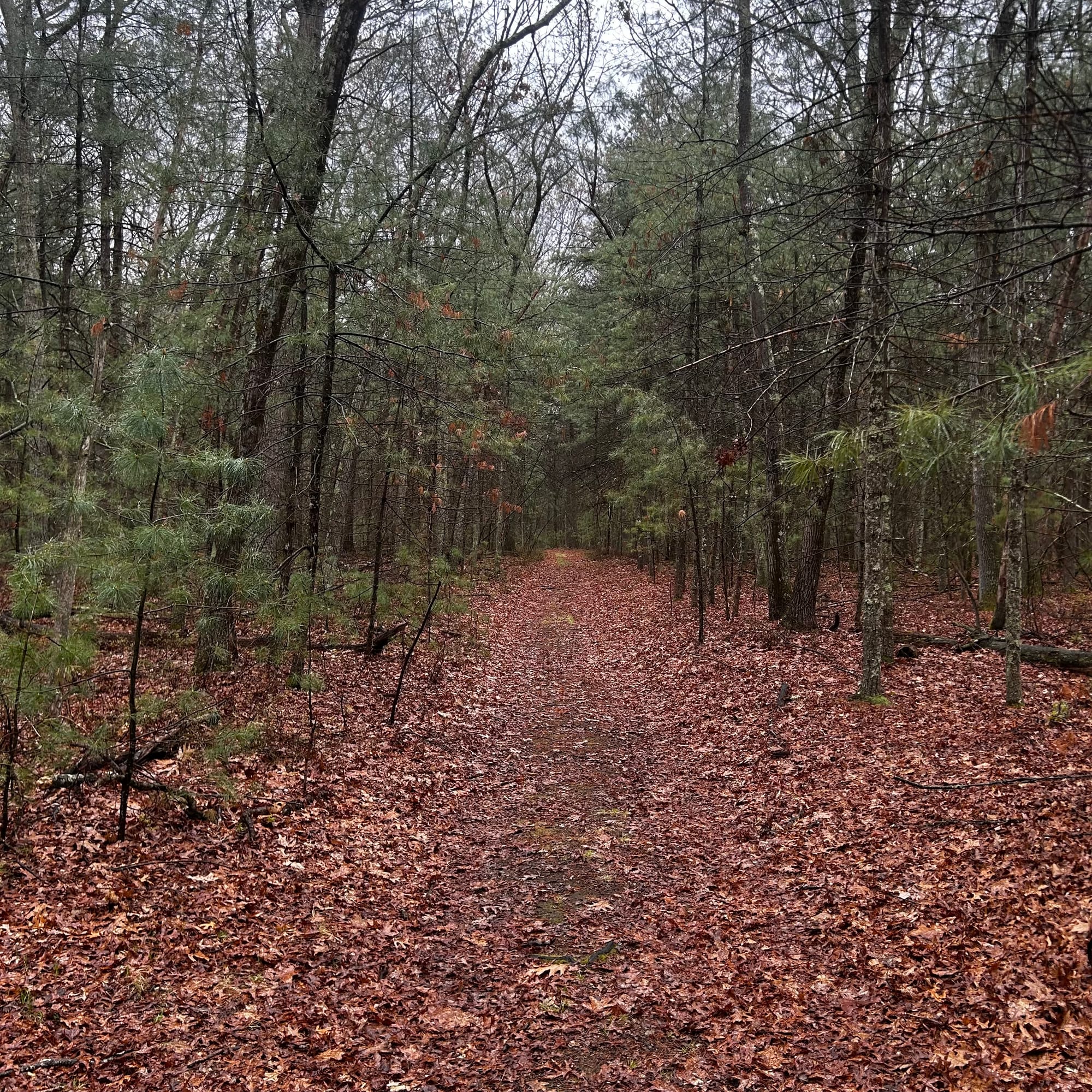
On April 30, 1844, Henry David Thoreau and a friend, Edward Hoar, set out in a boat along the Sudbury River, just south of downtown Concord. They planned to fish and camp for the night.
The first part of the morning went well: they caught what Thoreau later called "a mess of fish," then pulled ashore near Fairhaven Pond to cook their catch in an old pine stump.
At some point, a spark from the fire jumped from inside the stump to the surrounding grass.
"The earth was uncommonly dry, and our fire, kindled far from the woods in a sunny recess in the hillside on the east of the pond, suddenly caught the dry grass of the previous year which grew about the stump on which it was kindled," Thoreau would write in his journal years later.
Within minutes, the fire spread to the nearby forest.
"The fire had already spread a dozen rods on every side and went leaping and crackling wildly and irreclaimably toward the wood," Thoreau wrote. "That way went the flames with wild delight, and we felt that we had no control over the demonic creature to which we had given birth."
Thoreau ran two miles through the woods for help while Hoar took to the river. By the time neighbors arrived and fought the flames with backfires, hoes, and shovels, the fire had consumed more than 100 acres of forest, including sixty cords of cut wood belonging to one Concord farmer.
The newspaper estimated the damage at $2,000 and called the fire the result of "the thoughtlessness of two of our citizens." Thoreau, already something of an outsider in Concord thanks to his views on labor and society, wrote that his neighbors called him a "damned rascal" for the accident. He would be remembered as the responsible party for years afterward.
Thoreau deeply loved nature and the woods and waterways surrounding Concord. He spent his days sauntering through the forest, paying undivided attention to everything it offered. And now he'd accidentally damaged the thing he loved most.
Thoreau, who had written religiously since beginning his journal in 1837, didn't address the fire in writing until 1850, six years after the accident. He wrote that he "had felt like a guilty person,—nothing but shame and regret."
But he also admitted to something else. Despite causing the fire and witnessing its destruction firsthand, Thoreau viewed the event, in some ways, as a natural part of a living, changing ecosystem.
"I have set fire to the forest, but I have done no wrong therein, and now it is as if the lightning had done it," Thoreau wrote. "These flames are but consuming their natural food."
We'll never know how Thoreau truly felt about the fire, but the fact that it took him six years to address it in his journal—a running account of his life in which he wrote thousands of words every week—suggests he may have carried more regret than he let on.
Like Thoreau, we carry with us ideas of who we think we are. We may think of ourselves as a good friend, neighbor, parent, sibling, reader, athlete. But sooner or later, we run headlong into experiences that seem to contradict our self-image.
In those moments, we may feel guilt or shame, as Thoreau did. But with enough perspective, we can also decide that those contradictions don't have to define us.
Thoreau could still be an attentive naturalist who appreciated the woods, even after being responsible for burning 100 acres of them. We can also live with awareness and attention to the unexpected contradictions that shape our lives.
The challenge, then, isn't to avoid contradiction; that's impossible. We'll all do things that seem at odds with who we believe ourselves to be. The harder task is to accept that we can be more than one thing at once—that our most contradictory moments are not our whole story.