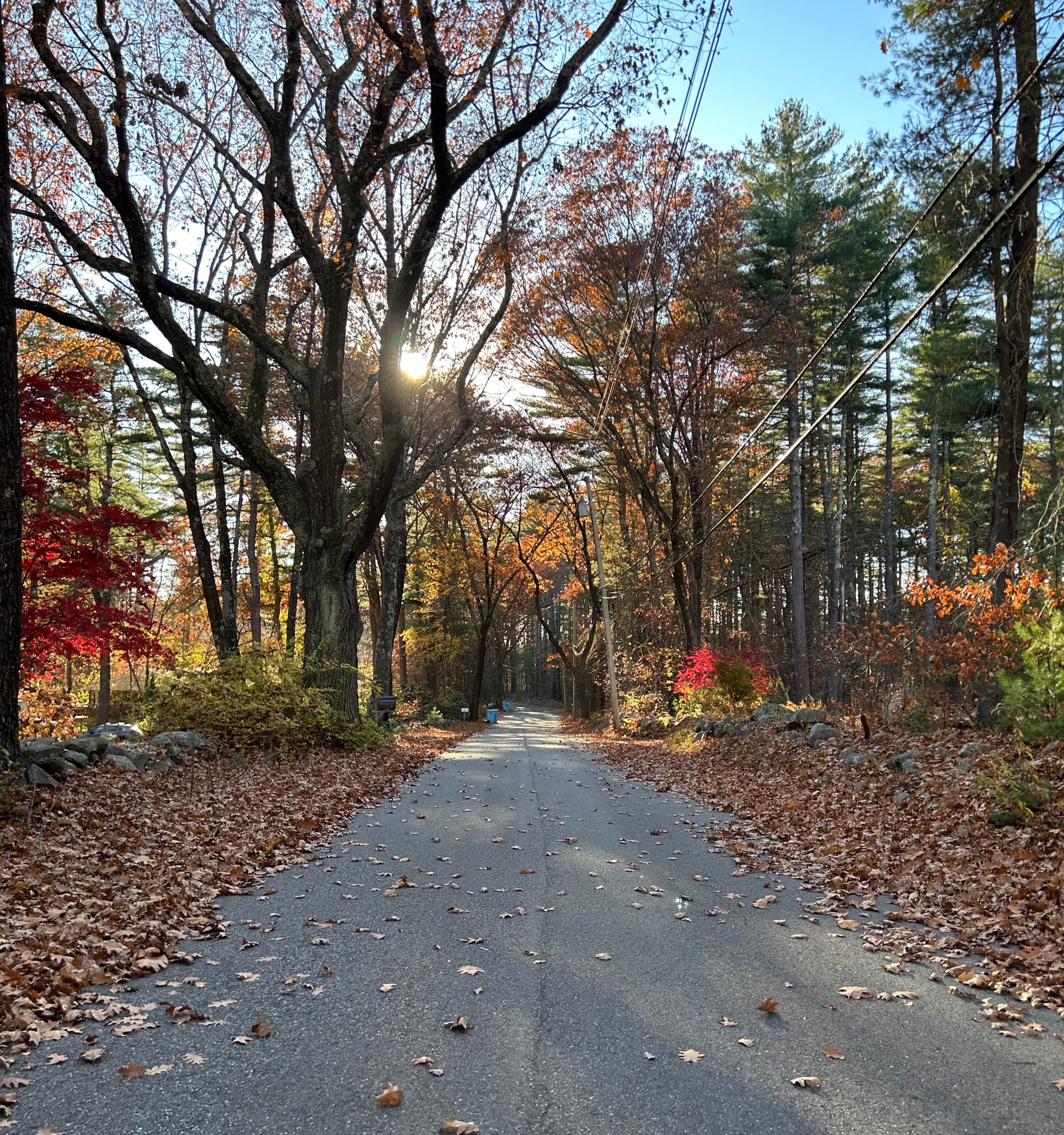
I spend most of my work time during the week in front of a laptop. I get up often, go outside as much as possible, take walks around the neighborhood, shoot hoops in the leaf-strewn driveway, but inevitably, every week, I spend far more time staring at a screen than I'd like.
I get a lot done, in different ways, but I've noticed that more often than not, some of my freshest thinking happens in the liminal places between work and play: the neighborhood walks between Zoom calls, the free throws in the driveway at lunch.
My best thinking, I'm convinced, doesn't happen when I want it to. It happens when I stop trying to make it happen.
Ralph Waldo Emerson noticed a similar pattern in an April 1834 journal entry.
"Set out to study a particular truth," he wrote. "Read upon it. Walk to think upon it. Talk of it. Write about it."
"The thing itself will not much manifest itself, at least not much in accommodation to your studying arrangements," Emerson continued. "The gleams you do get, out they will flash, as likely at dinner, or in the roar of Faneuil Hall, as in your painfullest abstraction."
The more I see this happen in my life, the more comfortable I am loosening the structure of my day to make room for unstructured whatever. Time spent in the hammock, walking around the trees on our property, or picking up sticks in the yard after a good storm, like my great-grandfather used to do in Indiana.
More than 180 years after Emerson observed this pattern, author Cal Newport made a similar case in Deep Work, arguing for the importance of "injecting regular and substantial freedom from professional concerns into your day, providing you with the idleness paradoxically required to get (deep) work done."
Unfortunately, this interstitial time between obligations and structured activities often gets squeezed out by phones, surface-level busyness, and technology, all of which create an artificial sense of urgency and importance while keeping us constantly occupied and "productive."
We can read, write, study, learn—all the good things. But if we recognize that the gleams run on their own schedule, and not ours, we can make room for their surprise, and enjoy their mystery.